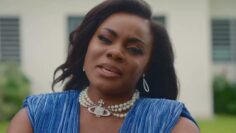



Ulanda
Ulanda Oben, also known by her stage name “Mama Makossa” or simply “Ulanda,” is a singer and songwriter from Limbe, Cameroon. She blends various African and international musical styles, including makossa, soul, pop, and Afrobeat.
Ulanda is one of those artists whose voices transcend borders, merge cultures, and transform emotions into vibrant music.
Born on December 31st in the sun-drenched coastal city of Limbe, Cameroon, Ulanda grew up in an environment where music was never background noise, but a constant presence. From a very young age, her sensitivity was honed. She listened, she observed, she felt. Music became a refuge, then a necessity.
In August 2011, Ulanda made a decision that would change her life’s trajectory: she left Cameroon to settle in the United States. This new world broadened her perspective. She discovers other sounds, other ways of creating, other ways of telling musical stories. She grows, both personally and artistically, gradually refining an identity that never denies her origins.
Despite the opportunities offered abroad, the call of Cameroon remains strong. Ulanda feels the need to return to her roots, to reconnect with the land that shaped her sensibility. This return acts as a revelation: her music gains depth, truth, and substance.
Her voice, often described as warm, sensual, and soulful, becomes the vehicle for an embraced cultural heritage. She sings of Cameroon without fixed nostalgia, but with a fluid modernity, open to the world.
To define Ulanda’s music in a single word would be reductive. Her world is contemporary, rich with a masterful fusion where Makossa, Soul, Pop, R&B, and Afrobeats intersect. She uses her voice as an instrument in its own right, sculpting delicate harmonies and profound vocal lines.
Her influences are prestigious and eclectic: Toni Braxton, Brandy, Whitney Houston, Céline Dion, Mariah Carey, but also Richard Bona, Lokua Kanza, Bebe Manga, and Charlotte Dipanda. She doesn’t copy these giants; she learns, absorbs, and then transforms them to create a language all her own.
Her lyrics, free and sincere, speak of love, identity, resilience, and inner beauty. They touch the heart effortlessly, resonating quietly.
Nicknamed Mama Makossa, Ulanda doesn’t simply revisit a mythical genre. She breathes new life into it, projects it into the present, and gives it a universal dimension. Through her music, she becomes a cultural ambassador, a bridge between Africa and the rest of the world.