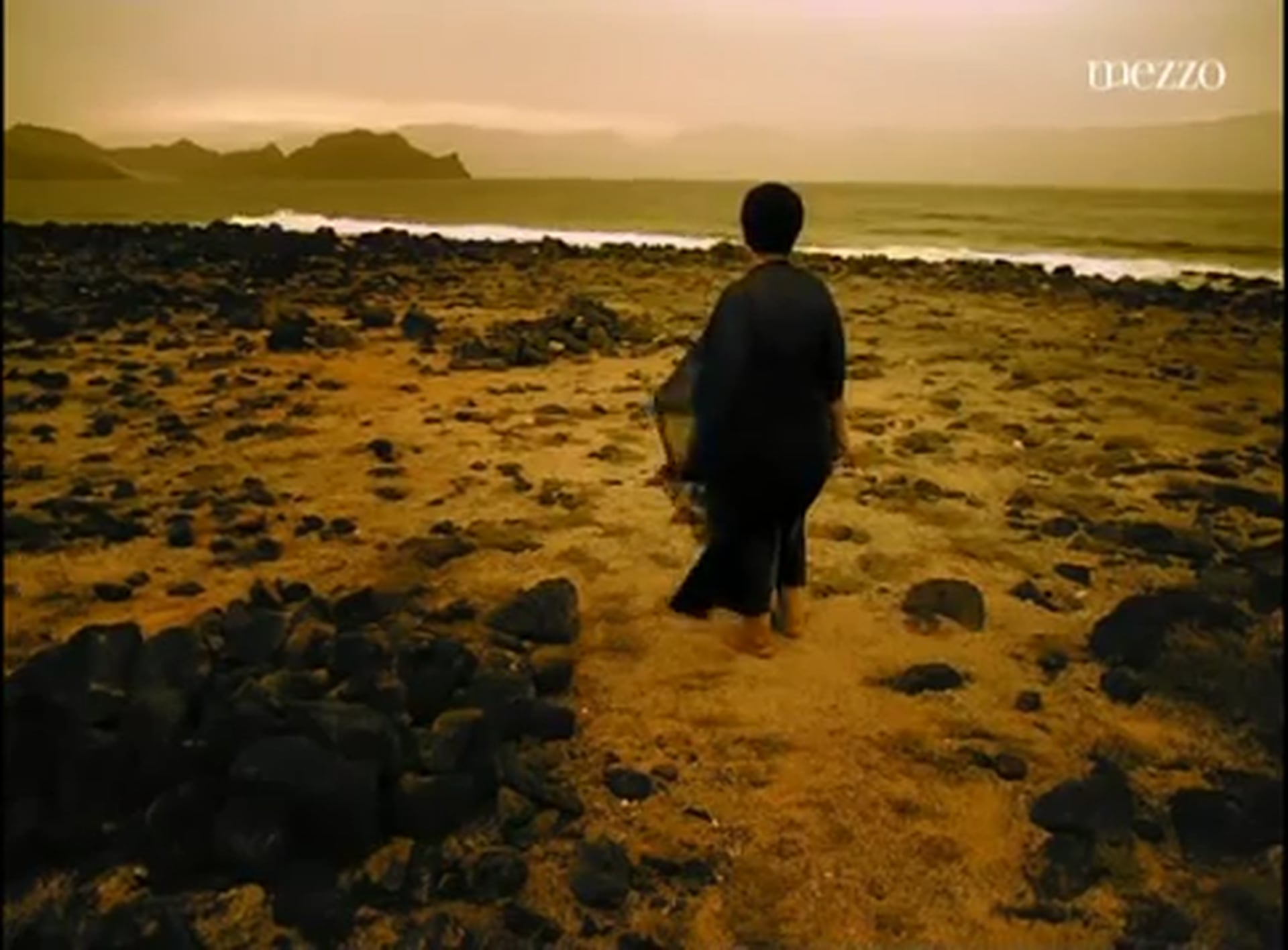



Cesária Évora (R.I.P)
Born on August 27, 1941, in Mindelo, on the island of São Vicente in Cape Verde, Cesária Évora grew up in a modest environment. Her family was large: her father, Justino da Cruz Évora, was an amateur musician (violin, guitar, cavaquinho), but he died when Cesária was barely seven years old.
At the age of ten, she was placed in an orphanage due to insufficient family resources. At a very young age, she discovered music by singing in sailors’ cabarets and bars in Mindelo, accompanied by local musicians, devoting herself to the traditional genres of morna and coladeira. This childhood, marked by poverty and music, would shape her style: melancholic, imbued with “sodade” (Cape Verdean nostalgia), but also with a rich and unique voice.
Although she began singing in her teens, her career has its dark sides. In the 1960s, she worked as a singer on cruise ships docking in Mindelo and on local stages.
In the 1970s, after Cape Verde’s independence, she went through a difficult period: income was scarce, she took a break from the stage, and struggled with alcoholism. The turning point came in 1985, when she was invited to perform in Portugal and then spotted by French producer José da Silva. Thanks to him, she recorded her first international album, La Diva aux Pieds Nus, in 1988. What had until then been a Cape Verdean cultural treasure was transformed into a world-renowned voice.
Cesária Évora’s international success exploded in the 1990s: the album Miss Perfumado (1992) was a major milestone, featuring her iconic song “Sodade.” She is now nicknamed “the Barefoot Diva” (because she often performed without shoes, in homage to the poor) and “the Queen of Morna.”
In 2004, she received the prestigious Grammy Award for Best Contemporary World Music Album for “Voz d’Amor.” Through her tours in Europe, the Americas, and Africa, she became an icon: not only for Cape Verdean culture, but for world music as a whole.
Her musical style revolved around morna, a melancholic Cape Verdean genre similar to fado, blues, and jazz, but also to the more rhythmic version of coladeira. Her low, warm, and emotionally charged voice, accompanied by guitars, cavaquinho, or piano, transports the listener to a world of nostalgia, love, departures, and returns.
In 2010, Cesária Évora underwent open heart surgery and canceled her concerts for health reasons.
She ended her career in September 2011 and died on December 17, 2011, in Mindelo, at the age of 70, from respiratory failure and hypertension.
In Cape Verde, her memory lives on: Mindelo Airport bears her name, and her image appears on stamps and banknotes.