

Iri Di
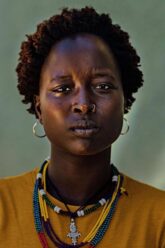
Iri Dimako Chordi is an Ethiopian singer, songwriter, and producer.
There are voices that seem to come from multiple worlds at once. Iri Di’s is one of them, a voice that transcends continents, eras, and sonic boundaries to weave something entirely new.
Born in Hamer, in the Omo Valley of southern Ethiopia, Iri Dimako Chordi grew up immersed in the polyphonic songs of her people, a millennia-old oral tradition where the voice is simultaneously prayer, storytelling, and identity. After living in several countries and studying at the University of Montreal, she chose to return to Addis Ababa, convinced that this is where her music should be born and flourish.
Completely self-taught, she doesn’t follow the beaten path. Singer, guitarist, and producer, she crafts her sonic universe from scratch, at the crossroads of heritage and innovation.
In her world, West Africa converses with the Maghreb, pentatonic harmonies intertwine with complex tonal structures, and organic rhythms meet a resolutely contemporary digital aesthetic. She integrates R&B, jazz, and soul into the fabric of her ancestral traditions, without ever sacrificing one for the other.
Through her compositions, she explores the fertile tension between the personal and the universal, between ancestral memory and the codes of Generation Z. Her artistic approach is above all a deconstruction of Ethiopian identity, intended for Ethiopians themselves as much as for the rest of the world. Rejecting clichés, she opens a space where Ethiopia reveals itself in all its complexity and modernity.
Singing in four languages (Hamer, Amharic, French, and English) is a choice to never reduce one’s message to a single identity. It’s a loud and clear declaration that one belongs to everyone, and first and foremost to oneself.
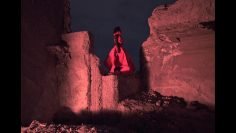
Her EP, 24, marks a significant milestone in her discography. Singles like Waymala, a Hamer word meaning “wait,” showcase a poetic style rooted in the circular philosophy of her people. Her music video, Late Night Buna, a veritable ode to Ethiopian coffee and Addis Ababa, illustrates her ability to blend visual aesthetics with sonic storytelling.
Already recognized on major stages, Iri Di has performed alongside leading figures in world music, confirming with each concert that her place is among the greats, not in their shadow, but alongside them, as an equal.
Rooted in Addis Ababa by choice and conviction, Iri Di belongs to a generation of Ethiopian artists who are reinventing traditional sounds with contemporary tools. There, she found her artistic community, and with it, the certainty that something new is emerging. “Addis is alive, it’s buzzing, there’s music about to blossom,” she says. And Iri Di is one of its most singular voices.