


Zagba Le Requin
Zagba le Requin — Biography, Age, Origin & Discography
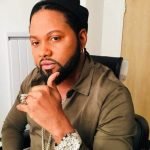
Zagba le Requin, whose real name is Oskane Dokui (alternate spelling: Oskane Dokoui), is an Ivorian rapper, artist and producer, born and raised in Abidjan, Côte d’Ivoire. Leader of the collective Team Paiya and creator of the “Maïmouna” musical style, he has become one of the most instantly recognizable voices in contemporary Ivorian rap.
Fact Sheet
| Attribute | Detail |
|---|---|
| Stage name | Zagba le Requin (nicknames: “Le Président,” “Quadranozore”) |
| Real name | Oskane Dokui (alternate spelling: Oskane Dokoui) |
| Date of birth | Not publicly disclosed to date |
| Age | Not publicly disclosed |
| Country | Côte d’Ivoire |
| Hometown | Abidjan |
| Genre | Ivorian rap, Coupé-décalé, Afrobeat — “Maïmouna” style |
| Years active | Since the early 2010s (Team Paiya founded in the late 2010s) |
| Label | Independent / Team Paiya |
| Group | Team Paiya (with Samo Samo, Doupi Papillon, Noukou Loba, Ste Milano) |
| Breakout single | “Maïmouna” (2018) |
| Published work | Les Proverbes de Zagba le Requin (essay/proverb collection, 2025) |
| Notable collaborations | Didi B (“Fimbu,” 2024), Tam Sir (“Coup du marteau”), Tazeboy (“GBO”), Molare |
| Other activities | Author, brand ambassador (Hennessy, Sombreros CI), mentor to young rappers, philanthropy |
Biography
A childhood shaped by media and music
To understand where Zagba le Requin comes from, you have to start in Abidjan. Long before he became the unmistakable voice millions now recognize, he was simply Oskane Dokui, son of Paul (Pol) Dokui, former director general of Radio Côte d’Ivoire under President Laurent Gbagbo. Growing up in a family that close to the media world shapes a person — Oskane was immersed early on in a universe where words, sound, and public presence were part of daily life. His older sister, Nesmonde Dokui, would go on to become a respected manager in Ivorian culture, working with groups like Kiff No Beat. Talent, in the Dokui family, seems to run in the blood — and young Oskane grew up against the backdrop of the rising Ivorian rap scene and Douk Saga’s triumphant coupé-décalé movement.
But Zagba le Requin’s story is anything but a smooth ride. The 2010–2011 post-electoral crisis in Côte d’Ivoire upended everything: the Dokui family suffered serious financial setbacks, its assets were frozen, and Oskane — then a student in South Africa — had to rush back home. Almost overnight, a comfortable childhood gave way to real hardship. To survive, he sold shoes, launched a small clothing brand, and even ran a bar. “We saw how money could disappear in the blink of an eye,” he later confided. It was in that difficult period that the character behind Zagba le Requin was forged — a lesson in humility, and the conviction that nothing replaces hard work.
Learning the ropes in Kiff No Beat’s shadow
Back in Abidjan, Oskane refused to give up on his musical dream. In the early 2010s, he began gravitating around the celebrated group Kiff No Beat, unable to formally join a lineup that was already complete. So he made himself indispensable in other ways, becoming the collective’s trusted go-to man — fetching equipment, running errands across Adjamé, doing favors for Black K, Didi B, and the rest of the crew. A behind-the-scenes, thankless-looking role that Zagba himself saw very differently: “It wasn’t easy… but I had a vision, and I knew where I was going.” Those years in the shadows taught him the mechanics of the industry, how a musical movement is built, and the quiet value of invisible work that always precedes the spotlight.
The breakthrough: Team Paiya and the birth of the “Maïmouna” style
The turning point came alongside a longtime friend, Samo Samo. Together, in the late 2010s, they founded the collective Team Paiya, which quickly became his creative platform. Zagba emerged as its natural leader — fans affectionately nicknamed him “Président” for his charisma and his ability to bring people together. In 2018, Team Paiya popularized a style called “Maïmouna,” named after one of their tracks: a sound that set Ivorian dancefloors on fire and became a nationwide reference within months. That was the moment Oskane Dokui definitively became Zagba le Requin in the public eye — a stage name that, by his own account, draws inspiration from the explorer Pierre Savorgnan de Brazza (he considers himself an “explorer” who lived in Congo-Brazzaville), where “Zagba” reportedly means “to give back what one receives” in his mother tongue, while “Requin” (“shark”) symbolizes strength and impact.
A career built on identity and cultural transmission
What truly sets Zagba le Requin apart is his ability to blend genres and languages. With Team Paiya, he fuses Ivorian rap with coupé-décalé, while weaving in heavy doses of nouchi — Abidjan’s popular street slang — and local proverbs. His punchlines and “gogos” (humorous catchphrases) have become memes, echoed both in the streets and across social media. This closeness to everyday language creates a rare bond with his audience, particularly Ivorian urban youth.
When it comes to collaborations, Zagba builds bridges between Abidjan’s different “teams” rather than staying in his own lane. His old proximity to Kiff No Beat eventually paid off: in 2024, he reunited with Didi B for the track Fimbu, a landmark moment for fans who’d followed his journey from the very beginning. He has also worked with Tam Sir on Coup du marteau, with Tazeboy on GBO, and with Molare on several tracks. Across his features, he’s appeared alongside Kadirov Mania, 3xdavs, PSK, Lesky, and Toto le Banzou — the mark of an artist who prefers uniting talent over dividing it, and who has earned genuine respect among his peers for that unifying role.
In March 2025, Zagba le Requin reached a new milestone: he published “Les Proverbes de Zagba le Requin,” a 109-page collection of 52 proverbs written in French and nouchi, with a preface by his sister and manager, Nesmonde Dokui. The book was presented at the Salon du Livre Africain de Paris that same year — a recognition that extends well beyond music and confirms his status as a genuine cultural torchbearer. Lines like “The chicken’s anger doesn’t scare the cook” or “Whatever the sheep’s anger, Tabaski will still take place” reflect his deep roots in Ivorian popular wisdom, which he now passes on to the next generation.
Beyond music and literature, Zagba le Requin has become a cultural figure in his own right: brand ambassador for names like Hennessy and Sombreros CI, panelist at youth-success forums, and an active supporter of several charitable causes. From the hardship he endured after Côte d’Ivoire’s crisis to the cultural recognition he enjoys today, his journey embodies a very Ivorian — and deeply African — story of resilience.
Discography and publications (selection)
- “Maïmouna” (2018) — the track that launched the eponymous style
- “GBO” — feat. Tazeboy
- “Fimbu” (2024) — feat. Didi B
- “Coup du marteau” — feat. Tam Sir
- “Petite position” — Molare feat. Zagba le Requin
- “Courir ahe eux” — PSK feat. Lesky, Taze Boy, Zagba le Requin
- “SVT1” — feat. Toto le Banzou, Arii
- “Les Proverbes de Zagba le Requin” (2025) — collection of 52 proverbs, Éditions Océane International
FAQ
What is Zagba le Requin’s real name? His real name is Oskane Dokui (also spelled Oskane Dokoui in some sources).
How old is Zagba le Requin? His date of birth is not publicly disclosed at this time. This information will be added once confirmed by a reliable source.
What country and city is Zagba le Requin from? He is Ivorian, born and raised in Abidjan, Côte d’Ivoire.
What music genre does Zagba le Requin perform? He works in Ivorian rap with coupé-décalé and afrobeat influences, and is known for popularizing the “Maïmouna” style.
What was Zagba le Requin’s first big hit? The track and style “Maïmouna,” released in 2018, which marked his breakthrough with the Team Paiya collective.
What is Team Paiya? The musical collective co-founded by Zagba le Requin and Samo Samo in the late 2010s, with Zagba as its leader — nicknamed “Président” by fans.
Social media and online presence